
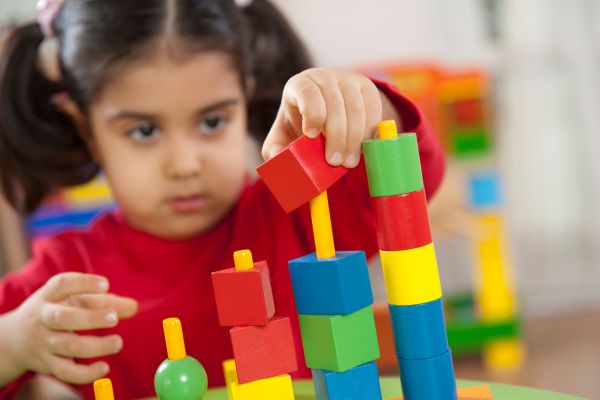
Preschool learning does not always look like sitting at a desk, holding a pencil, or repeating letters from a worksheet. In fact, for young children, some of the most powerful learning happens when they are laughing, moving, pretending, building, sorting, singing, and exploring. That is why educational games for preschoolers can be such a natural and effective way to support early development.
At this age, children learn through play. They are not only memorizing colors, numbers, and shapes; they are also learning how to wait for a turn, follow directions, solve small problems, express feelings, and stay curious. A simple game with blocks, cards, songs, or household objects can help build early academic skills while also giving children the confidence to try, fail, and try again.
The best part is that educational games do not need to be expensive, complicated, or perfectly planned. Many of the most useful preschool games can be played at home, in the classroom, at the park, or even while waiting in line. What matters most is that the activity feels playful, age-appropriate, and connected to the child’s natural interests.
Why Play Is So Important for Preschool Learning
Preschoolers are active learners. They understand the world by touching, moving, asking questions, copying adults, and testing ideas in real time. A child stacking blocks is not “just playing.” They are learning balance, size, patience, hand control, and cause and effect. A child pretending to run a grocery store is practicing language, counting, memory, and social interaction.
Play also keeps learning from feeling like pressure. Young children can quickly lose interest when an activity feels too formal or too difficult. But when learning is wrapped inside a game, they often stay engaged longer. They feel free to experiment because there is no heavy fear of being wrong.
This is especially important during the preschool years, when children are building their first relationship with learning. Games help them see learning as something enjoyable, not something stressful. That positive feeling can stay with them as they move into kindergarten and beyond.
Matching Games to a Preschooler’s Development
Not every educational game is right for every preschooler. Some three-year-olds may love counting objects, while others are more interested in movement games or pretend play. Some children enjoy quiet puzzles; others learn best by jumping, clapping, and singing.
A good preschool game should be simple enough for the child to understand but interesting enough to keep them engaged. It should allow space for mistakes. It should also be flexible because preschoolers often change the rules in the middle of play. That is not always a bad thing. Sometimes their “new rules” show creativity, problem-solving, and imagination.
Instead of focusing only on whether a child gets the right answer, it helps to notice how they think. Are they comparing? Remembering? Sorting? Listening? Trying again? These are all valuable parts of early learning.
Color and Shape Sorting Games
Sorting games are among the easiest educational games for preschoolers because they use objects children already know. Buttons, blocks, toy cars, socks, bottle caps, or craft pom-poms can become learning tools in minutes.
A parent or teacher might place a group of objects on the floor and invite the child to sort them by color. Later, the game can change to sorting by size, shape, texture, or type. A pile of mixed toys can become a chance to group animals, vehicles, soft toys, and building pieces.
This kind of play supports early math thinking. Before children learn formal addition or subtraction, they need to notice patterns, categories, differences, and similarities. Sorting helps build that foundation in a very natural way.
To keep it fun, the game can turn into a little challenge. “Can you find all the red things before I count to ten?” or “Which group has more?” These small questions encourage observation without making the game feel like a lesson.
Letter Hunt Around the Room
A letter hunt is a playful way to introduce early literacy. Instead of asking a child to sit still and memorize letters, the game gets them moving and noticing print in their environment.
Choose one letter, such as B, and look for it around the room. It might appear on a book cover, a cereal box, a toy label, or a wall poster. The child can point to the letter, say its sound, or find an object that begins with that letter.
This game works well because it shows children that letters are not just symbols in a workbook. They are part of everyday life. They appear on signs, packages, books, names, and favorite things.
For children who are just starting, use uppercase letters first because they are often easier to recognize. As they grow more confident, lowercase letters can be added. The goal is not speed or perfection. The goal is awareness, curiosity, and repeated exposure.
Counting Games With Everyday Objects
Counting becomes more meaningful when children can touch and move the objects they are counting. Preschoolers often enjoy counting snacks, toys, steps, blocks, or spoons at the table.
A simple game might involve placing five toy animals in a row and asking the child to count them. Then one animal “walks away,” and the child counts again. Without using formal math language, the child begins to understand that numbers change when items are added or taken away.
Snack time can also become a gentle counting game. A child can count crackers on a plate, divide grapes between two bowls, or compare who has more apple slices. These small activities help numbers feel real.
Counting games should stay light. If a child skips a number or counts the same object twice, that is part of learning. Instead of correcting too sharply, an adult can model the counting slowly and invite the child to try again.
Memory Matching Games
Memory matching games are excellent for concentration, visual recognition, and patience. Traditional picture cards work well, but homemade versions can be just as effective. Cards can show animals, shapes, letters, numbers, colors, or familiar household items.
The game begins with cards placed face down. The child turns over two cards and tries to find a match. If the cards do not match, they are turned back over, and the child tries to remember where each picture was.
This may seem simple, but it builds several important skills at once. Children practice focus, recall, turn-taking, and emotional control when they do not find a match right away. They also learn to pay close attention to small differences.
For younger preschoolers, start with only a few pairs. Too many cards can feel frustrating. As the child becomes more confident, more pairs can be added.
Puzzle Play for Problem-Solving
Puzzles are classic preschool learning tools for a reason. They help children develop hand-eye coordination, spatial awareness, patience, and problem-solving. A child looking for the right puzzle piece is learning to compare shapes, edges, colors, and patterns.
Large wooden puzzles are helpful for younger preschoolers, while older preschoolers may enjoy simple jigsaw puzzles with familiar pictures. Animal puzzles, vehicle puzzles, alphabet puzzles, and shape puzzles can all support different kinds of learning.
The real value of puzzle play is not only finishing the picture. It is the thinking that happens along the way. Children ask themselves, even silently, “Does this fit?” “Where does this color go?” “What happens if I turn it around?”
Adults can support this by offering hints rather than solving the puzzle for the child. A gentle comment like “Maybe look for a piece with blue on it” keeps the child involved in the thinking process.
Pretend Play With Real-Life Themes
Pretend play is one of the richest educational games for preschoolers because it combines language, imagination, social skills, and problem-solving. Children might pretend to be doctors, shopkeepers, teachers, chefs, builders, or parents.
A pretend grocery store can teach counting, sorting, conversation, and decision-making. A pretend restaurant can introduce menus, food names, polite language, and simple sequencing. A doctor game can help children learn body parts, empathy, and how to describe feelings.
Pretend play also gives children a safe space to understand the adult world. They copy what they see, repeat phrases they hear, and practice roles that help them make sense of daily life.
Adults do not need to control pretend play too much. Sometimes the best approach is to join in and follow the child’s lead. A cardboard box can become a shop counter, a spaceship, or a house. That flexibility is where much of the learning lives.
Movement Games That Teach Listening and Control
Preschoolers need movement. They are not designed to sit still for long periods, and movement games can teach just as much as quiet table activities. Games like “freeze dance,” “follow the leader,” and “red light, green light” help children practice listening, self-control, and coordination.
In freeze dance, children move while music plays and freeze when it stops. It sounds playful, but it strengthens attention and impulse control. In follow the leader, children copy actions such as hopping, clapping, stretching, or tiptoeing. This supports body awareness and sequencing.
Movement games are especially useful for energetic children who may struggle with seated tasks. They allow learning to happen through the body, which is often exactly what preschoolers need.
These games also help children learn rules in a friendly way. They practice stopping, starting, waiting, and responding to signals without feeling like they are being constantly corrected.
Rhyming and Sound Games
Early reading begins long before a child can read full words. Rhyming games help preschoolers hear the sounds inside language. This sound awareness is an important early literacy skill.
A simple rhyming game can begin with familiar words: cat, hat, bat, mat. The adult says a word, and the child tries to think of another word that sounds the same at the end. Silly words are welcome. In fact, preschoolers often love nonsense rhymes, and those playful mistakes still help them hear sound patterns.
Sound games can also focus on beginning sounds. “What else starts with mmm like moon?” The child might say milk, mouse, or mommy. These small games build awareness without needing flashcards or formal reading drills.
Songs, nursery rhymes, and clapping games also support rhythm and language development. Children often remember words better when they are connected to music and movement.
Building Games With Blocks and Loose Parts
Blocks, magnetic tiles, cardboard tubes, cups, and other loose parts can become powerful learning materials. Building games encourage creativity, planning, balance, and early engineering thinking.
A child may build a tower and watch it fall. Then they try again, perhaps using a wider base. That is problem-solving in action. They are learning through trial and error, even if they cannot explain it in adult language.
Adults can add gentle challenges such as “Can you build a bridge for this toy car?” or “Can you make a tower taller than your teddy bear?” These prompts encourage children to think with purpose while still keeping the activity playful.
Building games also support language. Children describe what they are making, ask for pieces, explain problems, and create stories around their structures.
Nature Games for Curiosity and Observation
Outdoor play offers endless opportunities for learning. A nature scavenger hunt can invite children to find a leaf, a rock, something soft, something green, or something that makes a sound. This builds observation skills and encourages curiosity about the world.
Preschoolers can sort leaves by size, count flowers, compare stones, or listen for birds. They can notice shadows, clouds, insects, and textures. These simple games introduce early science thinking without needing complicated explanations.
Nature games also slow children down in a healthy way. They learn to look closely, ask questions, and appreciate small details. A walk in the park can become a lesson in colors, weather, counting, movement, and language all at once.
The key is to let children wonder. When they ask why the sky changes color or why ants walk in a line, the conversation itself becomes part of the learning.
Digital Educational Games and Screen Balance
Digital educational games can have a place in preschool learning when used thoughtfully. Some apps and online games introduce letters, numbers, puzzles, music, or problem-solving in an interactive way. However, they work best when they are balanced with hands-on play, movement, conversation, and real-world exploration.
Preschoolers still need to touch objects, build with their hands, talk with people, and move their bodies. A screen can support learning, but it should not replace the deeper experiences children get from physical play and social interaction.
When choosing digital games, simple is usually better. Look for games that encourage thinking rather than passive watching. It also helps when adults sit nearby, ask questions, and connect the game to real life. For example, after a counting game on a screen, a child can count toy blocks or steps across the room.
How Adults Can Make Games More Meaningful
The adult’s role in preschool games is not to turn every moment into a lesson. It is to notice learning opportunities and gently support them. Sometimes that means asking a question. Sometimes it means stepping back and letting the child figure something out.
Children learn a lot from conversation during play. Words like bigger, smaller, behind, under, first, next, same, different, more, and less become easier to understand when they are connected to real actions.
Encouragement matters too. Instead of only saying “good job,” adults can describe what the child did. “You kept trying until the puzzle piece fit” or “You remembered where the card was” helps children recognize their own effort and thinking.
The most meaningful games are often the ones where children feel seen, not tested. When they feel relaxed and supported, they are more willing to explore.
Choosing Games That Grow With Your Child
A good educational game can often grow with a preschooler. A basic color sorting game can later become pattern-making. A simple counting game can become adding one more. A pretend shop can grow into writing signs, counting pretend money, or making shopping lists.
This flexibility keeps learning fresh. It also respects the child’s pace. Some days a preschooler may be ready for a challenge. Other days they may simply want to repeat a familiar game because it feels comforting. Repetition is not wasted time. It helps children strengthen skills and build confidence.
Parents and teachers do not need to rush children into advanced activities. Preschool learning is about building foundations. The goal is not to make children perform beyond their age but to give them rich, playful experiences that prepare them for future learning.
Conclusion
Educational games for preschoolers work best when they feel like play first and lessons second. Through sorting, counting, pretending, building, moving, rhyming, and exploring nature, young children develop the early skills they need for school and life. They learn how to think, communicate, focus, cooperate, and solve problems in ways that feel natural to them.
The most valuable games are not always the most expensive or the most polished. Often, they are simple moments shared with an attentive adult: counting crackers, hunting for letters, building a block tower, or pretending to run a tiny grocery store in the living room. These playful experiences help children connect learning with joy, and that connection may be one of the best gifts we can give them before they step into the wider world of school.